7:00am. Late October 2025. Tuerong Farm & Tuerong Bakery

The morning was quiet and peaceful. The weather is still cold enough to wear a warm sweater. I can feel the crisp, cold air on my cheeks. I’m standing on the grass, a bit south from where the grains are growing. Tuerong Bakery is quietly operating behind me. The Kookaburras are taunting their morning greetings. “OoOoOoo a’a’a’a’a’a”’. Looking ahead, I witness a lush array of green and yellow. Last time I visited this field, the grains were mostly green. The run is rising, confusing me about whether the yellow grains I see are from the senescing wheat or the warmth being shone onto the field. Quietly sitting behind the large trees is a delicate sheet of morning fog. Have you seen morning fog? It is jaw-droppingly beautiful. As I walk further into the field, the fog slowly bids adieu, disappearing in sync with the steady rise of the sun.
The wind blows in a long, gentle whoosh. A dreamy morning. I walk further into the field. My feet submit to being drenched from the morning dew. Ah, something I didn’t take into consideration when choosing my pair of shoes this morning at 6:00am. I continue walking until my heart softens from seeing a beautiful view. There it is, a sight of tall, flowing grains, kissed with a “hairlight” from the sunlight hitting them at just the right angle. It melts my heart, and my shot is decided. I plop my camerabag onto the grass, prepare my Asahi camera, kneel, and begin viewing nature’s masterpiece from my viewfinder.
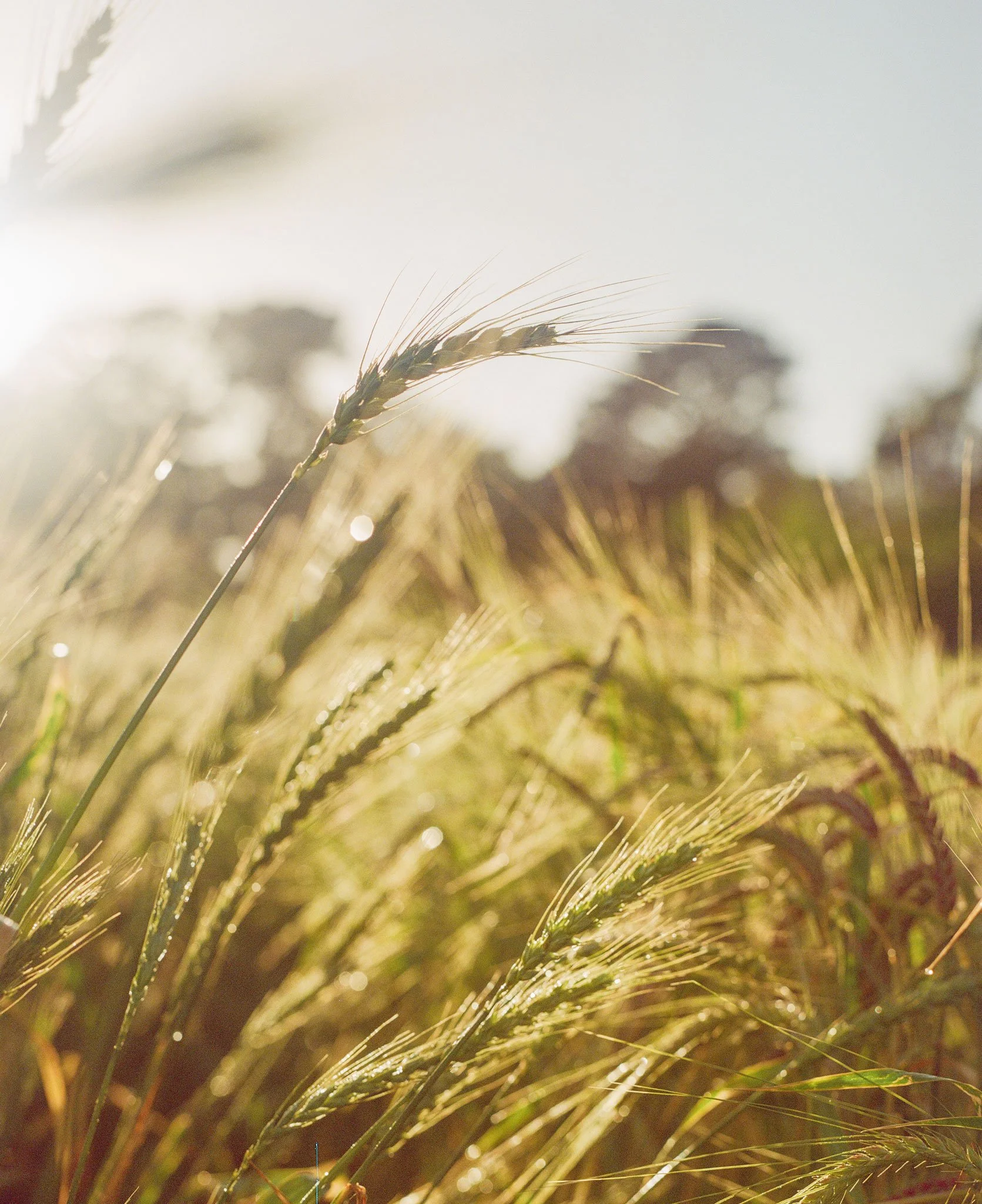

A dreamy morning.
I take a few minutes to adjust my body to remember my exact previous position to finding that heart-melting view. I look at my subject from eye-level. Hmmm, no, the sun isn’t shining as nicely there. I shift my body to see the grains from a bug’s point of view. Clearly this isn’t quite it either. Perhaps, was it from this side, instead? Ah, there it is. I aim, and press the shutter button. “Click.” That old, mechanical sound enchants me every time. The sun continues rising, and my mind is urging me to remember that my priority for the day is to film the baking crew. So I commit to just one more photograph. I walk further down, find a few more sun-kissed grains, already modelling for me. I quickly kneel again, aim, and capture.
What, a beautiful morning already. To the bakery.
Tuerong Bakery. Head Baker Nick
7:30am. Late October.
I open the solid, wooden door to the bakery. The lights are a bit dim - and I can hear sounds of working machinery as soon as I open the door. Immediately upon entering, I see a man wearing a grayish apron looking down at something. He is working with a large, yellowish, flat dough that is sitting on top of a large, metal workbench. The dough appears to be at least half a meter long. He looks up, surprised to see me. Heck, who wouldn’t be surprised seeing anyone at this time?
I take a few moments to introduce myself and the purpose of my visit. He kindly accepts his doomed fate of being stared at by a camera lens during this shift. Pointing to his right, he introduces his fellow baker who is working in the baking room. Harpreet, a man of few words, also accepts his similarly unfortunate fate for the morning.
There is something soothing about hearing the different sounds of a bakery on a quiet, early morning. In the room where Nick, the head baker is working, I hear soft thuds of the dough dropping onto the bench. When the dough is placed onto the rolling machine, it begins - the whirring of a large machine as the dough is dragged from one side of the long machine to the next. It looks a lot like a cut off conveyor belt in the eyes of somebody like me who knows little about pastry baking.
In the baking room, Harpreet is making and preparing the dough for a variety of breads. When I step in, immediately I hear a soft, rhythmic clunking of a dough mixer. It is sitting near the ground behind him. Although small, it is powerful. Intermittently, there is a loud thud - a dropping of a large container holding dough that has been resting, preparing itself to be shaped into bread.
Eventually Nick moves over to the baking room, and they begin working. Sometimes standing side by side, sometimes across from each other, both swiftly perform their roles harmoniously. I notice that Harpreet takes the role of cutting the dough and measuring it. Both of them take the measured dough and roll it like they've been undergoing this process for years. Their hands convince me that they have rolled dough at least 3000 times in their life. My favourite part of watching Harpreet rolling the dough is this gentle punch he gives the dough every time. Yes, I am tempted to make a reel of just that. A little chat here and there is heard, but both are focused on the task. Nick turns on chill indie music, a nice background vibe.
Looking to one corner of the baking room, opposite from the ovens, are at least 10 large containers of dough waiting to be formed into delicious bread. The bakers sure must be strong. Although there is work to do, they appear calm, and rather stress-free. It is Mornington, after all.
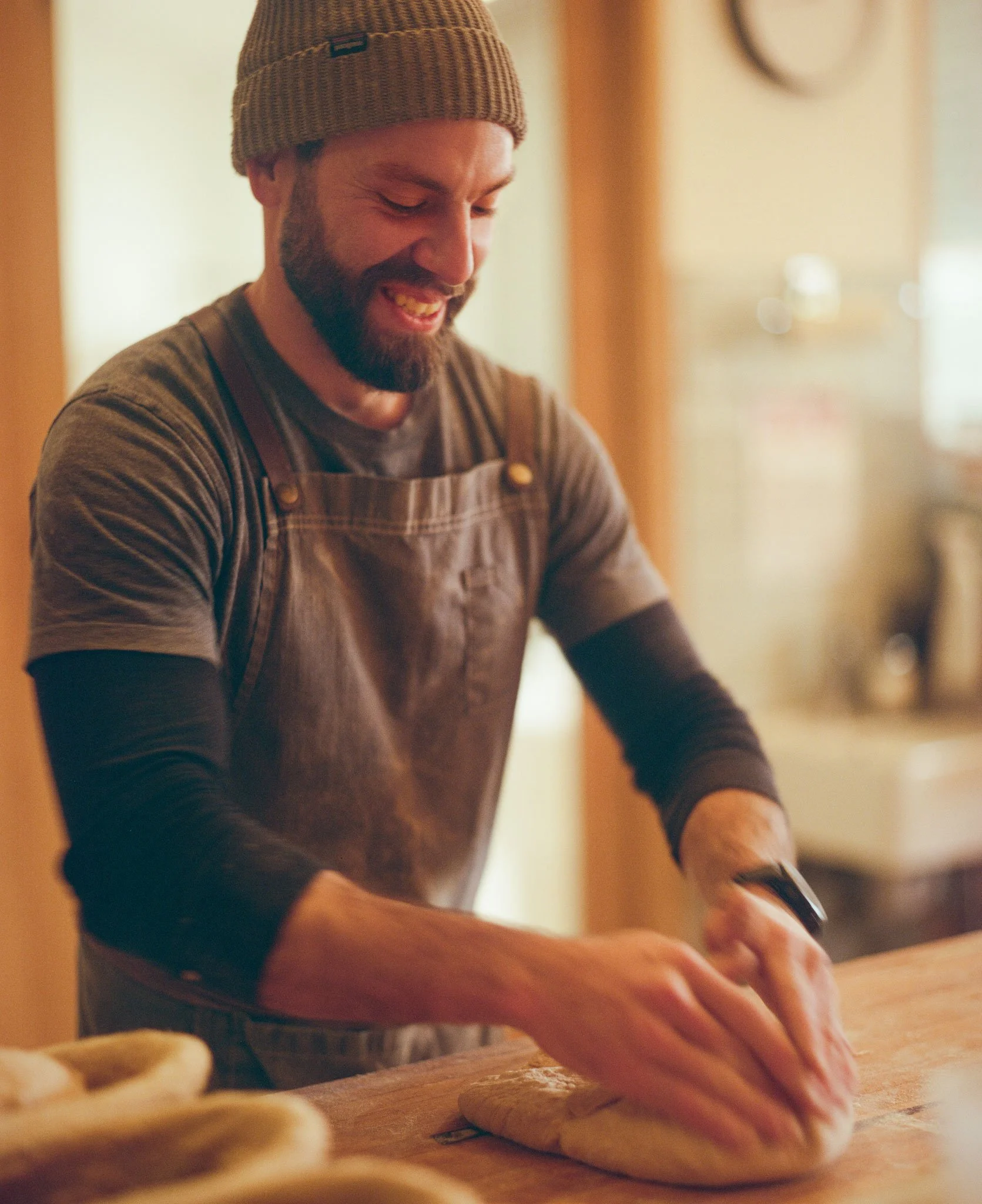
Once the dough is rolled, they are placed into individual bread tins. The bread tins look cute enough to be sold for $50 each at vintage shops. One by one, the rolled bread remove vacancy in the tins. Once the tins are filled, they are moved onto resting racks. From there, they are covered. Sadly I don’t get to see those specific rolls being baked, as bakers compete this task in an overnight shift.
As the morning sun continues rising, more light enters the baking room. It adds warmth into the space - and I can’t resist my urge to capture them at work with my film camera. At the time, the film with the highest ISO on hand is a 400. I pop the film into the camera, and roll the spool. Checking my meter… oof. The dim lighting will be pushing my film a bit. Hoping for the best, I try a few shots anyways. Click, click, click.
After several hours, I finally relieve Nick and Harpreet from modeling duty and bid them farewell. By the end, I’m convinced that they’re alright with me. I grab a cup of coffee from a local shop (which is delicious), and I eventually head home.
I wait one week to receive the developed film photos. Most of them are unfortunately underexposed, but one turns out great. Hooray! It is a satisfying photograph. I can see the calm energy of the morning. I can feel the baker’s chill energy. It shows the milled flour from the grain grown on Tuerong Farm. It shows the hands in motion, working on the bread. For now, I am content.
I’m looking forward to visiting again to capture the baking process.
So, in case you are curious, their baked goods are absolutely worth trying. They are absolutely tasty.
Chat soon,
Masumi